


Somalia's role in global Frankincense trade
Moderators: Moderators, Junior Moderators
Forum rules
This General Forum is for general discussions from daily chitchat to more serious discussions among Somalinet Forums members. Please do not use it as your Personal Message center (PM). If you want to contact a particular person or a group of people, please use the PM feature. If you want to contact the moderators, pls PM them. If you insist leaving a public message for the mods or other members, it will be deleted.
This General Forum is for general discussions from daily chitchat to more serious discussions among Somalinet Forums members. Please do not use it as your Personal Message center (PM). If you want to contact a particular person or a group of people, please use the PM feature. If you want to contact the moderators, pls PM them. If you insist leaving a public message for the mods or other members, it will be deleted.
-
DaacasBiyo

- SomaliNet Heavyweight

- Posts: 1095
- Joined: Wed Jun 07, 2017 4:14 pm
-
ExSomalispotter
- Posts: 112
- Joined: Sat Jun 03, 2017 12:56 am
Re: Somalia's role in global Frankincense trade
In the end frankincense ends up in the catholic churches.
-
Xildiiid
- SomaliNet Super

- Posts: 7200
- Joined: Thu May 15, 2014 4:45 pm
- Location: Since light travels faster than sound, people appear bright until you hear them speak
Re: Somalia's role in global Frankincense trade
It's not Somalia but Somaliland and 95% of Frankincense and Myrrh harvesters and traders are Isaaq. It's our culture. Small neighboring clans like Magaadle and others have taken up our trade/culture hence the remaining 5%.
We are the descendants of the people who traded with the Ancient Egyptian Pharaohs. The names Punt and Puntland were presented as alternatives during the Burao conference in 1991 when we reclaimed our independence. People instead chose the name we had when we gained our independence in the first place hence Somaliland.
Ironically the copycats to the East of Somaliland took that name in 1998 when their tribal enclave was created. Zero authenticity, creativity etc.
We are the descendants of the people who traded with the Ancient Egyptian Pharaohs. The names Punt and Puntland were presented as alternatives during the Burao conference in 1991 when we reclaimed our independence. People instead chose the name we had when we gained our independence in the first place hence Somaliland.
Ironically the copycats to the East of Somaliland took that name in 1998 when their tribal enclave was created. Zero authenticity, creativity etc.
Last edited by Xildiiid on Fri Jul 07, 2017 5:40 am, edited 2 times in total.
-
ExSomalispotter
- Posts: 112
- Joined: Sat Jun 03, 2017 12:56 am
Re: Somalia's role in global Frankincense trade
True that thats why alot of Frankincense is founded in Cal Madow.Xildiiid wrote: Fri Jul 07, 2017 5:29 am It's not Somalia but Somaliland and 95% of Frankincense and Myrrh harvesters and traders are Isaaq. It's our culture. Small neighboring clans like Magaadle and others have taken up our trade/culture hence the remaining 5%.
Were I am From Dhanan is Good for Canno Geel and Xilb geel. That why we are big and tall
Re: Somalia's role in global Frankincense trade
Puntland is one of the world’s largest producers of high quality frankincense. We are a company that deals in the best grade Somali Frankincense. We have all grades available of Frankincense and can provide the needed quantity.

http://www.puntlandfrankincense.com/
http://www.puntlandfrankincense.com/
-
Xildiiid
- SomaliNet Super
- Posts: 7200
- Joined: Thu May 15, 2014 4:45 pm
- Location: Since light travels faster than sound, people appear bright until you hear them speak
Re: Somalia's role in global Frankincense trade
^
Lol, taking a quote from an advertising website as if they're stating the truth.
The Frankincense forests are found in western Sanaag and north eastern Togdheer because of the limestone soil type. It's the second largest source of revenue for the SL government after livestock and the documentary was filmed in western Sanaag, the researcher is being assisted by representatives from the SL government.
Lol, taking a quote from an advertising website as if they're stating the truth.
The Frankincense forests are found in western Sanaag and north eastern Togdheer because of the limestone soil type. It's the second largest source of revenue for the SL government after livestock and the documentary was filmed in western Sanaag, the researcher is being assisted by representatives from the SL government.
-
PanSomaliNationalist

- SomaliNet Heavyweight
- Posts: 3421
- Joined: Tue Aug 09, 2016 7:35 pm
Re: Somalia's role in global Frankincense trade
Stfu galbeed Sanaag doesn't have any frankincense only bari Sanaag doesXildiiid wrote: Fri Jul 07, 2017 7:40 am ^
Lol, taking a quote from an advertising website as if they're stating the truth.
The Frankincense forests are found in western Sanaag and north eastern Togdheer because of the limestone soil type. It's the second largest source of revenue for the SL government after livestock and the documentary was filmed in western Sanaag, the researcher is being assisted by representatives from the SL government.
-
AwRastaale

- SomaliNet Super
- Posts: 7611
- Joined: Mon Nov 30, 2015 5:09 am
Re: Somalia's role in global Frankincense trade
Fik outta here with Somalia BS.
100% SL
https://www.voanews.com/a/for-frankince ... 47975.html
We need to invest more.
100% SL
https://www.voanews.com/a/for-frankince ... 47975.html
We need to invest more.

Re: Somalia's role in global Frankincense trade
The exact location of Punt is still debated by historians. Most scholars today believe Punt was situated to the southeast of Egypt, most likely in the coastal region of modern Djibouti, Eritrea, northeast Ethiopia, Somalia, and the Red Sea littoral of Sudan. However, some scholars point instead to a range of ancient inscriptions that locate Punt in the Arabian Peninsula. It is also possible that the territory covered both the Horn of Africa and Southern Arabia. Puntland, the Somali administrative region situated at the extremity of the Horn of Africa, is named in reference to the Land of Punt.
https://en.wikipedia.org/wiki/Land_of_Punt
-
Xildiiid
- SomaliNet Super
- Posts: 7200
- Joined: Thu May 15, 2014 4:45 pm
- Location: Since light travels faster than sound, people appear bright until you hear them speak
Re: Somalia's role in global Frankincense trade
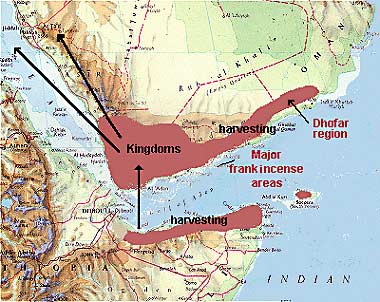
That fake map is so ridiculous. Let's ignore the fact that this map was created with the computer program paint, frankincense producing trees do not grow in Socotra. Yemen and Oman have long been excluded as possible locations of Punt because of the exotic African fauna such as Giraffes, black rhinos etc. that were among the gifts from Punt.
Punt in its proper sense was Eritrea, northeastern Ethiopia, Somaliland and to some extent northern Somalia (present day 'Puntland'). The high grade incense found in the graves of the ancient pharaohs have been identitified as Boswellia Frerereana also known as Maydi (the etymology comes from the city of Maydh). Maydi is the only Boswellia tree that grows in close proximity to the sea which is what the Ancient Egyptians described in their hieroglyphs from their voyage to Punt.
I know what you're trying to do Arabman but let's be frank, the Pharaohs were not fond of the Semitic Asiatics or desert dwellers as they also called them.
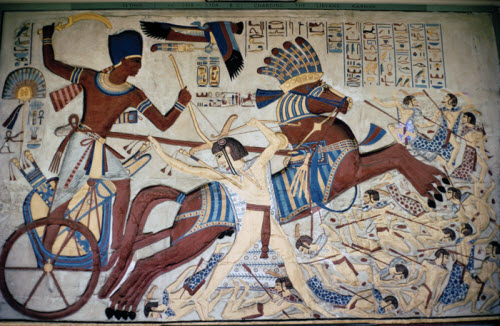
Ramses II in action.
Punt in its proper sense was Eritrea, northeastern Ethiopia, Somaliland and to some extent northern Somalia (present day 'Puntland'). The high grade incense found in the graves of the ancient pharaohs have been identitified as Boswellia Frerereana also known as Maydi (the etymology comes from the city of Maydh). Maydi is the only Boswellia tree that grows in close proximity to the sea which is what the Ancient Egyptians described in their hieroglyphs from their voyage to Punt.
I know what you're trying to do Arabman but let's be frank, the Pharaohs were not fond of the Semitic Asiatics or desert dwellers as they also called them.
Ramses II in action.
-
DaacasBiyo
- SomaliNet Heavyweight
- Posts: 1095
- Joined: Wed Jun 07, 2017 4:14 pm
Re: Somalia's role in global Frankincense trade
Xildiiid wrote: Fri Jul 07, 2017 9:44 pm That fake map is so ridiculous. Let's ignore the fact that this map was created with the computer program paint, frankincense producing trees do not grow in Socotra. Yemen and Oman have long been excluded as possible locations of Punt because of the exotic African fauna such as Giraffes, black rhinos etc. that were among the gifts from Punt.
Punt in its proper sense was Eritrea, northeastern Ethiopia and Somaliland. The high grade incense found in the graves of the ancient pharaohs have been identitified as Boswellia Frerereana also known as Maydi (the etymology comes from the city of Maydh). Maydi is the only Boswellia tree that grows in close proximity to the sea which is what the Ancient Egyptians described in their hieroglyphs from their voyage to Punt.
I know what you're trying to do Arabman but let's be frank, the Pharaohs were not fond of the Semitic Asiatics or desert dwellers as they also called them.
LOL, northeastern Ethiopia, that's a good one, I guess Djibouti should change it's name then.
-
Xildiiid
- SomaliNet Super
- Posts: 7200
- Joined: Thu May 15, 2014 4:45 pm
- Location: Since light travels faster than sound, people appear bright until you hear them speak
Re: Somalia's role in global Frankincense trade
Djibooty is in reality the western flank of Somaliland and before the arrival of the colonialists, it was ruled by an Isaaq man. He ruled an area stretching from Tadjoura to Berbera.
Northeastern Ethiopia is included because the African Blackwood grows in northeastern Ethiopia and Eritrea but not Somaliland or northern Somalia ('Puntland'). African Blackwood was among the gifts from Punt. The description of Punt in the hieroglyphs is that each state (city state?) had its own ruler. So it was more of a connected network of trading states than a large centralized kingdom.
The people who lived in Punt were most likely speakers of proto lowland east Cushitic, in other words the ancestors of modern day Saho, Afar and Somali.
Northeastern Ethiopia is included because the African Blackwood grows in northeastern Ethiopia and Eritrea but not Somaliland or northern Somalia ('Puntland'). African Blackwood was among the gifts from Punt. The description of Punt in the hieroglyphs is that each state (city state?) had its own ruler. So it was more of a connected network of trading states than a large centralized kingdom.
The people who lived in Punt were most likely speakers of proto lowland east Cushitic, in other words the ancestors of modern day Saho, Afar and Somali.
-
DaacasBiyo
- SomaliNet Heavyweight
- Posts: 1095
- Joined: Wed Jun 07, 2017 4:14 pm
Re: Somalia's role in global Frankincense trade
Yes, so neither Djibouti nor Somaliland existed at that time but if we are talking now and you are mentioning Somaliland, you also have to mention Djibouti otherwise it looks ridiculous.Xildiiid wrote: Fri Jul 07, 2017 10:00 pm The people who lived in Punt were most likely speakers of proto lowland east Cushitic, in other words the ancestors of modern day Saho, Afar and Somali.

-
- Similar Topics
- Replies
- Views
- Last post
-
- 5 Replies
- 2010 Views
-
Last post by Executive
-
- 24 Replies
- 3076 Views
-
Last post by ahmad guray
-
- 10 Replies
- 128 Views
-
Last post by ahmad guray
-
- 10 Replies
- 1533 Views
-
Last post by juzme123
-
- 5 Replies
- 1162 Views
-
Last post by theyuusuf143
-
- 0 Replies
- 983 Views
-
Last post by newsbot
-
- 0 Replies
- 339 Views
-
Last post by newsbot
-
- 2 Replies
- 16128 Views
-
Last post by micky
-
- 1 Replies
- 689 Views
-
Last post by kambuli
-
- 3 Replies
- 1065 Views
-
Last post by King-of-Awdal